JavaScript学习笔记13-事件循环

进程,线程,浏览器的事件循环,Node的事件循环,宏任务,微任务,执行顺序判断面试题

1. 进程和线程

1.1. 进程和线程概念

  • 线程和进程是操作系统中的两个概念

    • 进程(process):计算机已经运行的程序,是操作系统管理程序的一种方式
    • 线程(thread):操作系统能够运行运算调度的最小单位,通常情况下它被包含在进程中
  • 简单理解

  • 进程:启动一个应用程序,就会默认启动一个进程(也可能是多个进程)

  • 线程:每一个进程中,都会启动至少一个线程用来执行程序中的代码,这个线程被称之为主线程

  • 所以也可以说进程是线程的容器

  • 再用一个形象的例子解释

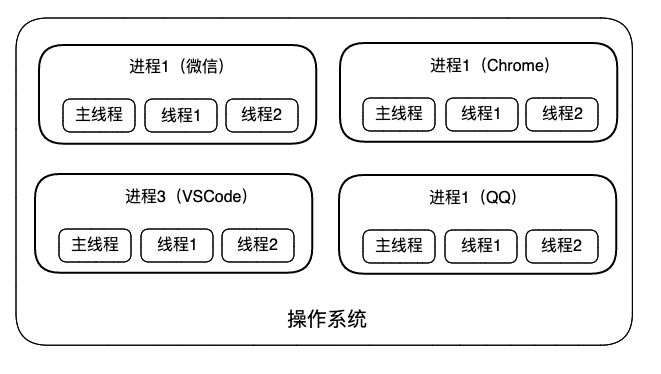
    • 操作系统类似于一个大工厂
    • 工厂中里有很多车间,这个车间就是进程
    • 每个车间可能有一个以上的工人在工厂,这个工人就是线程

1.2. 操作系统 – 进程 – 线程
1.3. 操作系统的工作方式

  • 操作系统是如何做到同时让多个进程(边聊天、边写代码、边查阅资料)同时工作呢?

    • 这是因为CPU的运算速度非常快,它可以快速的在多个进程之间迅速的切换
    • 当进程中的线程获取到时间片时,就可以快速执行我们编写的代码
    • 对于用户来说是感受不到这种快速的切换的
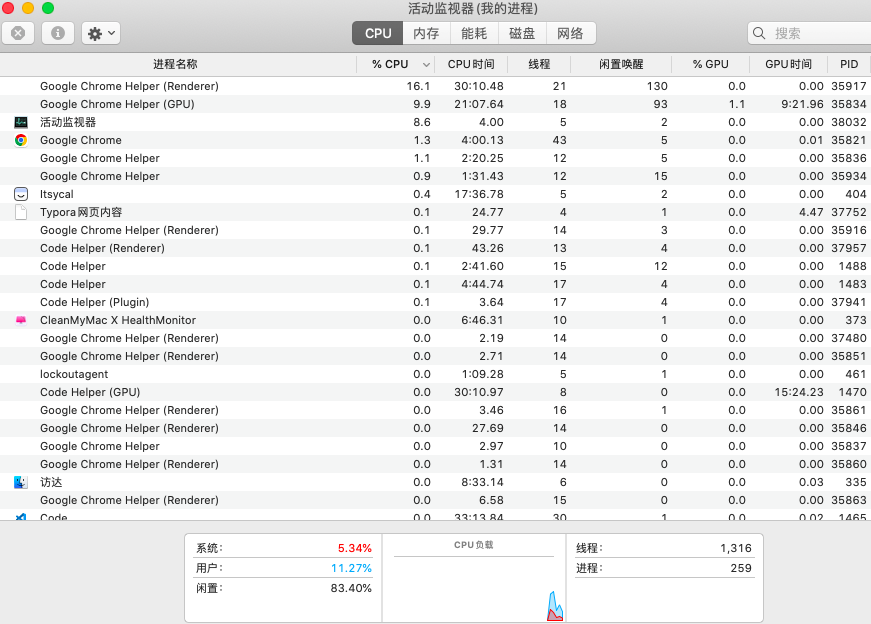
  • 可以在Mac的活动监视器或者Windows的资源管理器中查看到很多进程

1.4. 浏览器中的JavaScript线程

  • 经常会说JavaScript是单线程,但是JavaScript的线程应该有自己的容器进程:浏览器或者Node

  • 浏览器是一个进程吗,它里面只有一个线程吗?

    • 目前多数的浏览器其实都是多进程的,打开一个tab页面时就会开启一个新的进程,这是为了防止一个页面卡死而造成所有页面无法响应,整个浏览器需要强制退出
    • 每个进程中又有很多的线程,其中包括执行JavaScript代码的线程
  • JavaScript的代码执行是在一个单独的线程中执行的

    • 这就意味着JavaScript的代码,在同一个时刻只能做一件事
    • 如果这件事是非常耗时的,就意味着当前的线程就会被阻塞
  • 所以真正耗时的操作,实际上并不是由JavaScript线程在执行的

    • 浏览器的每个进程是多线程的,那么其他线程可以来完成这个耗时的操作
    • 比如网络请求、定时器,我们只需要在特性的时候执行应该有的回调即可

2. 浏览器的事件循环

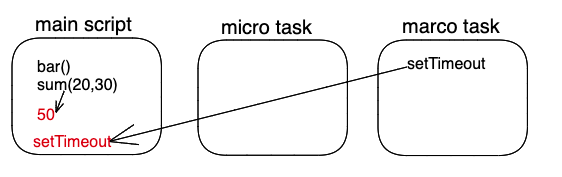
  • 如果在执行JavaScript代码的过程中,有异步操作呢?
    • 插入了一个setTimeout的函数调用
    • 这个函数被放到入调用栈中,执行会立即结束,并不会阻塞后续代码的执行
1
2
3
4
5
6
7
8
9
10
11
12
13
14
15
16
17
function sum(num1,num2){
return num1+num2;
}

function bar(){
return sum(20,30);
}

setTimeout(()=>{
console.log("setTimeout");
},1000);

const result = bar();
console.log(result);

// 50
// setTimeout

2.1. 宏任务和微任务

  • 事件循环中并非只维护着一个队列,事实上是有两个队列

    • 宏任务队列(macrotask queue):ajax、setTimeout、setInterval、DOM监听、UI Rendering等
    • 微任务队列(microtask queue):Promise的then回调、 Mutation Observer API、queueMicrotask()等
  • 那么事件循环对于两个队列的优先级是怎么样的呢?

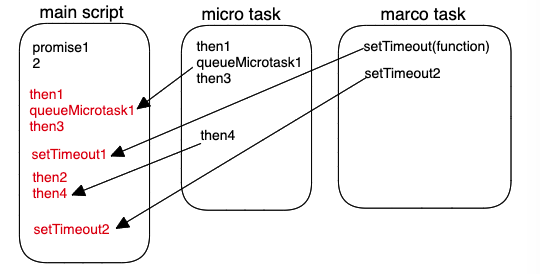
    1. main script中的代码优先执行(编写的顶层script代码)
    2. 在执行任何一个宏任务之前(不是队列,是一个宏任务),都会先查看微任务队列中是否有任务需要执行
      • 也就是宏任务执行之前,必须保证微任务队列是空的
      • 如果不为空,那么就优先执行微任务队列中的任务(回调)

2.2. 面试题

2.2.1. 面试题一

1
2
3
4
5
6
7
8
9
10
11
12
13
14
15
16
17
18
19
20
21
22
23
24
25
26
27
28
29
30
31
32
33
34
35
36
37
38
39
40
41
42
43
44
45
46
setTimeout(function () {
console.log("setTimeout1");
new Promise(function (resolve) {
resolve();
}).then(function () {
new Promise(function (resolve) {
resolve();
}).then(function () {
console.log("then4");
});
console.log("then2");
});
});

new Promise(function (resolve) {
console.log("promise1");
resolve();
}).then(function () {
console.log("then1");
});

setTimeout(function () {
console.log("setTimeout2");
});

console.log(2);

queueMicrotask(() => {
console.log("queueMicrotask1")
});

new Promise(function (resolve) {
resolve();
}).then(function () {
console.log("then3");
});

// promise1
// 2
// then1
// queueMicrotask1
// then3
// setTimeout1
// then2
// then4
// setTimeout2

2.2.2. async/await

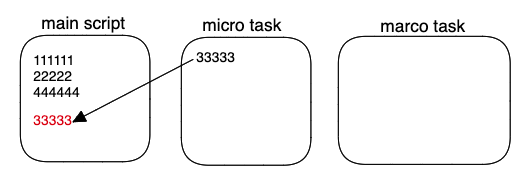
await之后的语句相当于放在promise的then中

1
2
3
4
5
6
7
8
9
10
11
12
13
14
15
16
17
18
19
20
21
22
async function bar() {
console.log("22222");
return new Promise((resolve) => {
resolve();
});
}

async function foo() {
console.log("111111");

await bar();

console.log("33333");
}

foo();
console.log("444444");

// 111111
// 22222
// 444444
// 33333

2.2.3. 面试题二

1
2
3
4
5
6
7
8
9
10
11
12
13
14
15
16
17
18
19
20
21
22
23
24
25
26
27
28
29
30
31
32
33
34
35
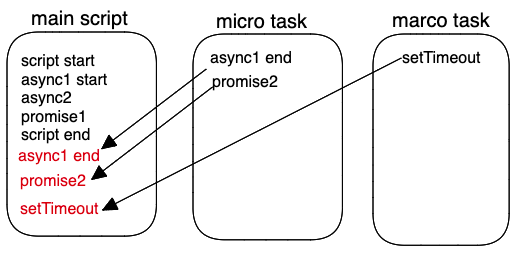
async function async1() {
console.log("async1 start");
await async2();
console.log("async1 end");
}

async function async2() {
console.log("async2");
}

console.log("script start");

setTimeout(function () {
console.log("setTimeout");
}, 0);

async1();

new Promise(function (resolve) {
console.log("promise1");
resolve();
}).then(function () {
console.log("promise2");
});

console.log("script end");

// script start
// async1 start
// async2
// promise1
// script end
// async1 end
// promise2
// setTimeout

2.2.4. 面试题三

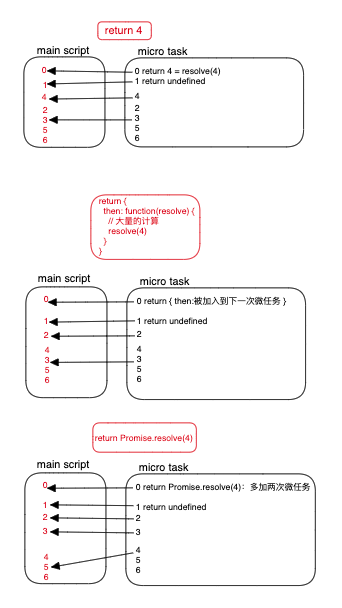
  1. promise的then函数中直接return值,相当于 resolve(值)
  2. promise的then函数中return的是实现了thenable的对象,则接下来的then会被安排到下一次微任务中,以防止thenable中有大量计算
  3. promise的then函数中return的是promise对象,则会因为非普通值而被安排到下一次微任务,又因为是Promise.resolve则then又被安排到下一次微任务,错过两次微任务
1
2
3
4
5
6
7
8
9
10
11
12
13
14
15
16
17
18
19
20
21
22
23
24
25
26
27
28
29
30
31
32
33
34
35
36
37
38
39
40
41
42
43
44
45
46
47
48
49
50
51
52
53
54
55
56
57
58
59
60
Promise.resolve().then(() => {
console.log(0);
// 1.直接return一个值 相当于resolve(4)
// return 4

// 2.return thenable的值
return {
then: function(resolve) {
// 大量的计算
resolve(4)
}
}

// 3.return Promise
// 不是普通的值, 多加一次微任务
// Promise.resolve(4), 多加一次微任务
// 一共多加两次微任务
return Promise.resolve(4)
}).then((res) => {
console.log(res)
})

Promise.resolve().then(() => {
console.log(1);
}).then(() => {
console.log(2);
}).then(() => {
console.log(3);
}).then(() => {
console.log(5);
}).then(() =>{
console.log(6);
})

// 1.return 4
// 0
// 1
// 4
// 2
// 3
// 5
// 6

// 2.return thenable
// 0
// 1
// 2
// 4
// 3
// 5
// 6

// 3.return promise
// 0
// 1
// 2
// 3
// 4
// 5
// 6

3. Node的事件循环

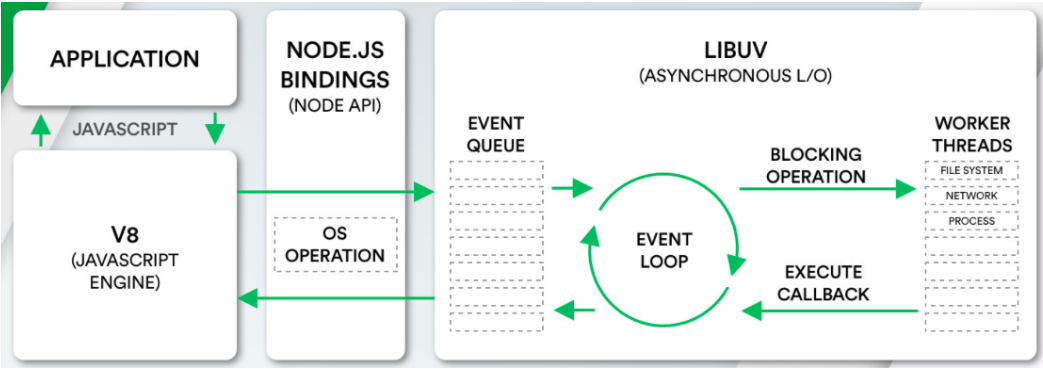
  • 浏览器中的EventLoop是根据HTML5定义的规范来实现的,不同的浏览器可能会有不同的实现,而Node中是由 libuv实现的

  • Node的架构图

    • libuv中主要维护了一个EventLoop和worker threads(线程池)
    • EventLoop负责调用系统的一些其他操作:文件的IO、Network、child-processes等
  • libuv是一个多平台的专注于异步IO的库,它最初是为Node开发的,但是现在也被使用到Luvit、Julia、pyuv等其他地方
3.1. Node事件循环的阶段

  • 事件循环像是一个桥梁,是连接着应用程序的JavaScript和系统调用之间的通道

    • 无论是文件IO、数据库、网络IO、定时器、子进程,在完成对应的操作后,都会将对应的结果和回调函 数放到事件循环(任务队列)中
    • 事件循环会不断的从任务队列中取出对应的事件(回调函数)来执行
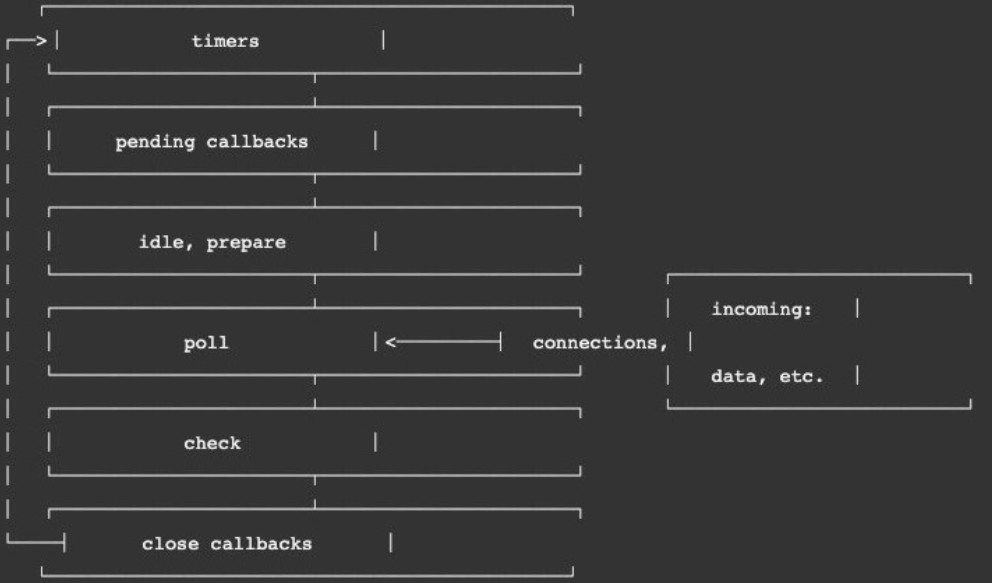
  • 但是一次完整的事件循环Tick分成很多个阶段

    • 定时器(Timers):本阶段执行已经被 setTimeout() 和 setInterval() 的调度回调函数
    • 待定回调(Pending Callback):对某些系统操作(如TCP错误类型)执行回调,比如TCP连接时接收到ECONNREFUSED
    • idle, prepare:仅系统内部使用
    • 轮询(poll):检索新的 I/O 事件;执行与 I/O 相关的回调
    • 检测(check):setImmediate() 回调函数在这里执行
    • 关闭的回调函数:一些关闭的回调函数,如:socket.on(‘close’, …)

3.2. Node事件循环的阶段图解
3.3. Node的宏任务和微任务

  • 从一次事件循环的Tick来说,Node的事件循环更复杂,也分为微任务和宏任务

    • 宏任务(macrotask):setTimeout、setInterval、IO事件、setImmediate、close事件
    • 微任务(microtask):Promise的then回调、process.nextTick、queueMicrotask
  • 但是,Node中的事件循环不只是微任务队列和 宏任务队列

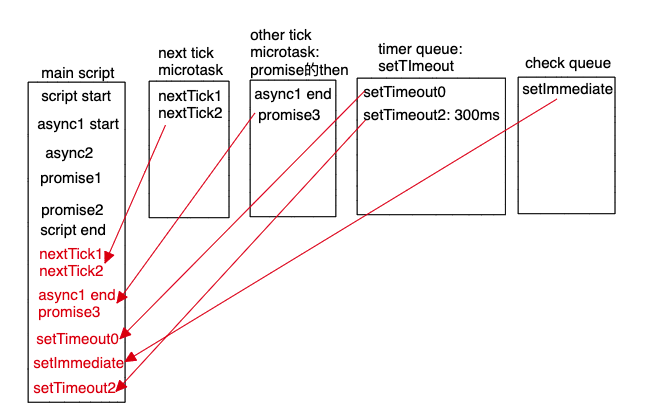
    • 微任务队列
      • next tick queue:process.nextTick
      • other queue:Promise的then回调、queueMicrotask
    • 宏任务队列
      • timer queue:setTimeout、setInterval
      • poll queue:IO事件
      • check queue:setImmediate
      • close queue:close事件

3.4. Node事件循环的顺序

  • 在每一次事件循环的tick中,会按照如下顺序来执行代码
    • next tick microtask queue
    • other microtask queue
    • timer queue
    • poll queue
    • check queue
    • close queue

3.5. Node执行面试题

1
2
3
4
5
6
7
8
9
10
11
12
13
14
15
16
17
18
19
20
21
22
23
24
25
26
27
28
29
30
31
32
33
34
35
36
37
38
39
40
41
42
43
44
45
46
47
48
49
50
51
async function async1() {
console.log('async1 start')
await async2()
console.log('async1 end')
}

async function async2() {
console.log('async2')
}

console.log('script start')

setTimeout(function () {
console.log('setTimeout0')
}, 0)

setTimeout(function () {
console.log('setTimeout2')
}, 300)

setImmediate(() => console.log('setImmediate'));

process.nextTick(() => console.log('nextTick1'));

async1();

process.nextTick(() => console.log('nextTick2'));

new Promise(function (resolve) {
console.log('promise1')
resolve();
console.log('promise2')
}).then(function () {
console.log('promise3')
})

console.log('script end')

// script start
// async1 start
// async2
// promise1
// promise2
// script end
// nexttick1
// nexttick2
// async1 end
// promise3
// settimetout0
// setImmediate
// setTimeout2

本文结束  感谢您的阅读